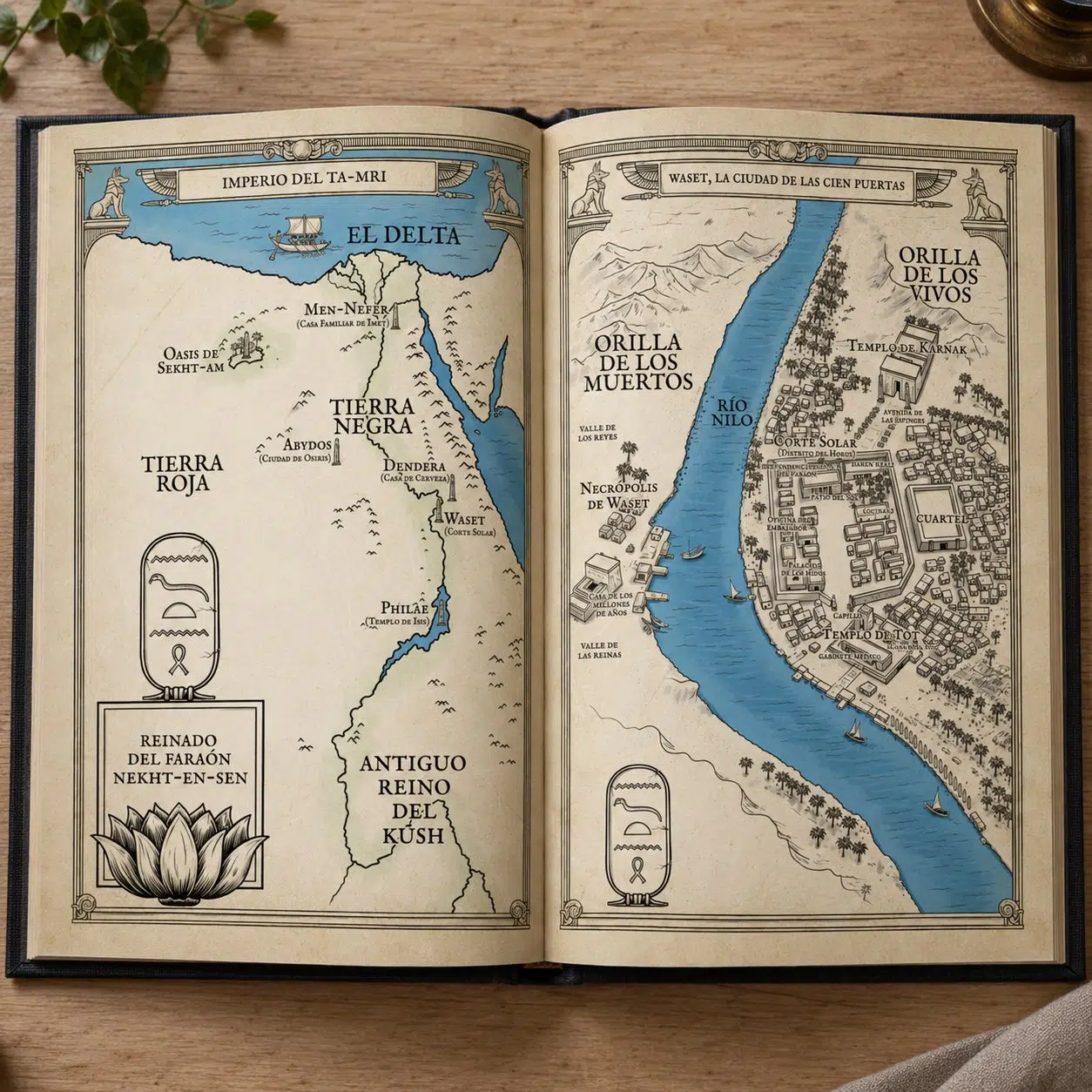
Do you love reading and art? Have you ever wondered how those two passions come together to create books that capture the imagination? The answer lies in the work of an illustrator at a publishing house: the person who turns words into covers, maps and images that make readers pick up a book and stay inside it.
Note: this is an informative guide about the profession. If you have a publishing project, you can see my services and previous work on my graphic and editorial illustration page.
Illustrator at a publishing house
What does an illustrator at a publishing house do?
An editorial illustrator does not just create pretty pictures. Their job is to complement the text of a book, whether a novel, a children’s story or a magazine article, with images that make it more attractive, clearer and more immersive for the reader. The main tasks are:
- Creating book covers. The cover is the reader’s first impression of a book, so it must catch the eye and convey what the story is about.
- Illustrating the interior. Characters, settings and key scenes in children’s books, novels, chapter headers or articles.
- Designing maps, infographics and diagrams. Maps of real or imaginary places, and graphics that explain complex information in a clear, attractive way.


Why publishers need illustrators
Illustrators are an essential part of the publishing process. The images they create can:
- Capture attention: a striking image can be the difference between a reader picking up a book or walking past it.
- Communicate the message: pictures help explain complex ideas, especially in textbooks and children’s books.
- Create a more immersive experience: illustrations help readers sink into the story and connect with characters and settings.
How an illustrator at a publishing house works
Most projects follow similar steps. The publisher or author sends a brief with the text, the target audience and the format; the illustrator prepares sketches; the editorial team reviews them; and the final art is delivered ready for print, at the right size, resolution and colour profile. Along the way, the illustrator works closely with editors, designers and sometimes the author, so communication matters as much as drawing skills.
Many editorial illustrators also handle part of the graphic design: lettering on covers, layouts for spines and back covers or consistent styles for a whole collection. That combination of illustration and design is what makes a book feel complete.


Skills that make a good editorial illustrator
- Reading comprehension: understanding the story, its tone and its readers before drawing anything.
- Versatility: adapting the style to fantasy, horror, science fiction, children’s books or non-fiction.
- Technical knowledge: print requirements, bleeds, trim sizes and file formats.
- Respect for deadlines: publishing calendars are tight, and the illustration is often the last piece before printing.
In summary
The work of an illustrator at a publishing house combines art, creativity and a passion for literature. Illustrators are a key part of the editorial process, because their images complement the text and enrich the reader’s experience.
If you are looking for an illustrator for a cover, a map or interior illustrations, see my work as an editorial illustrator for novels and book covers, read how to hire a map illustrator or get in touch.